

Deck season in Massachusetts is short and precious, so the deck you build should spend those months being used, not being sanded and stained. The decking material you choose shapes how the deck looks, how much it costs and how many weekends it asks of you.
Below we compare the four materials we install most often for homes in Everett, Revere and Swampscott, and explain why the frame underneath matters regardless of the boards on top.
Pressure-treated pine
Pressure-treated southern yellow pine is the most economical decking and the standard for deck framing. It is treated with preservatives that resist rot and insects, and it accepts paint and stain well once it dries.
The trade-off is maintenance. Treated pine can check, crack and warp as it weathers, and it needs cleaning and staining every couple of years to look its best. For homeowners who do not mind that routine, it delivers a solid deck at the lowest initial cost.
Color and finish choices also matter with treated pine. Solid stains hide the green tint of new lumber and last longer than clear sealers, while semi-transparent stains show more grain but need recoating sooner. Painting decking surfaces is generally not recommended because foot traffic wears paint quickly and peeling becomes a constant chore. Railings and trim, which see less wear, hold paint far better than the walking surface.
Cedar
Western red cedar has natural oils that resist decay, a pleasant aroma and a warm color that weathers to silver if left untreated. It is lighter and more stable than pine and is a favorite for homes with a traditional or coastal style.
Cedar is softer, so it dents more easily under furniture and dog claws, and it costs more than treated pine. Like pine, it needs periodic cleaning and finishing to keep its original color.
Composite and PVC
Composite boards combine wood fibers and plastic under a protective cap, while PVC boards are entirely synthetic. Both resist rot, do not need staining and keep their color far longer than wood. Modern products offer realistic grain patterns and many colors.
They cost noticeably more up front and can get hot in direct sun, especially darker colors. They also need specific fasteners and gapping rules from the manufacturer, which installers must follow to keep the warranty valid.
Salt air and coastal homes
Near the ocean, capped composite and PVC hold up well, but fasteners and hardware still need to be stainless or highly corrosion resistant.
The frame matters more than the boards
Composite decking does not make a deck last longer if the frame underneath rots. Almost every composite deck is built on pressure-treated framing, and the same rules apply: footings below frost depth, a properly flashed and bolted ledger, joist tape on top of joists and connectors rated for treated lumber.
Composite boards often outlive their frames when framing is done poorly. When resurfacing an older deck, we inspect the frame first and recommend replacement if joists or the ledger are compromised.
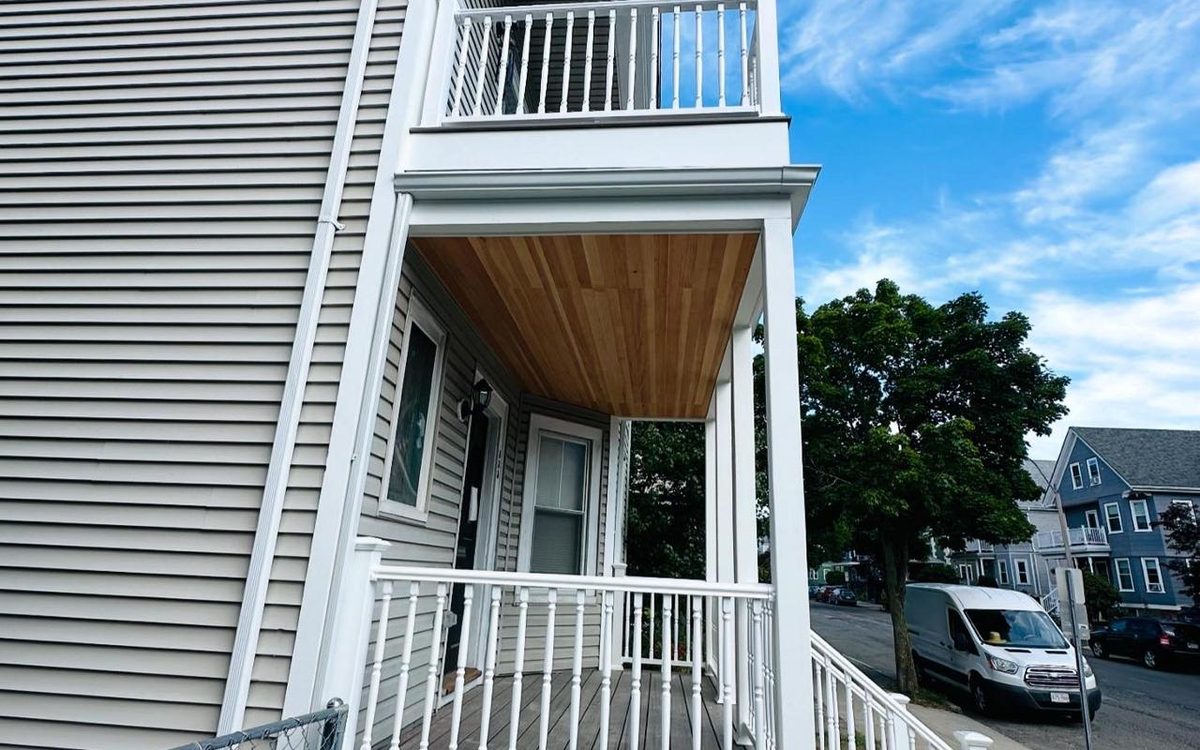
Comparing total cost
A fair comparison looks at the cost over the time you will own the home. Treated pine is cheapest to build but costs time and money in staining. Composite costs more on day one but saves most of that maintenance.
For a family planning to stay ten years or more, the gap often narrows considerably. For a home that may be sold in a few years, a well-built pressure-treated deck can be the more practical investment.
Choosing for your household
Think about sun exposure, pets, how you use the deck and how much maintenance you will realistically do. A shaded deck may stay damp and favor composite. A sunny south-facing deck may favor lighter colors.
Ask to see full-length samples outdoors before deciding. Colors change in sunlight, and texture feels different underfoot than in a showroom.
Finally, think about what sits under the deck. A low deck close to the ground needs ventilation so framing can dry out, while a tall deck creates usable space below that can be screened with lattice or turned into dry storage with an under-deck drainage system.
Railings, stairs and the details that finish a deck
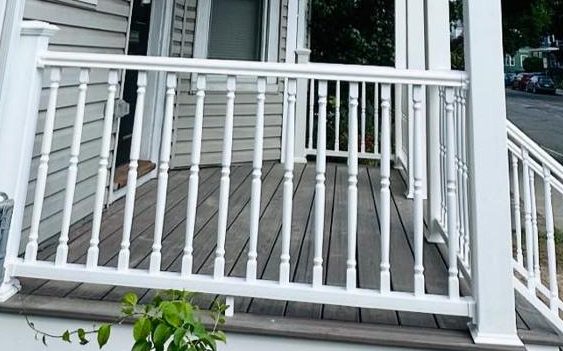
Railings are often the most visible part of a deck from inside the house, so choose them with views in mind. Aluminum balusters and cable rail keep sightlines open, while wood and composite balusters give a more traditional look. Whatever the style, the posts must be fastened through the framing with proper hardware so the guard can resist a person leaning against it.
Stairs deserve the same attention. Consistent riser heights, solid stringers and a graspable handrail make a deck safer for everyone. Adding a landing pad of pavers or concrete at the base keeps the bottom step from sinking into a soft lawn over time.
Quick checklist
- Guard height and baluster spacing to code
- Posts fastened through the framing
- Even risers and solid stringers
- A firm landing at the bottom of the stairs
The bottom line
The best decking material is the one that matches your budget, your patience for maintenance and the way your family uses the yard. Whatever you choose, insist on a properly built frame, flashed ledger and secure railings. Those are the parts that decide whether your deck is still safe and solid when the boards eventually need replacing.
Frequently asked questions
Quality composite decking often carries 25-year or longer warranties against rot and fading, provided it is installed according to the manufacturer's instructions.
Only if the frame is sound and joist spacing meets the composite manufacturer's requirements, which are often tighter than for wood.
Not always every year, but most need cleaning and a stain or sealer every two to three years to resist weathering.
Lighter colors stay cooler than dark ones in every material. Among synthetics, some capped products are designed to absorb less heat; wood generally stays cooler to the touch than dark composite.
Related services

Written by the AP Tile team
Tile setters and carpenters based in Everett, MA, with more than 10 years of hands-on renovation work across Greater Boston.