A shower is the hardest-working room in most houses. It sees hot water, steam, soap, cleaning products and daily traffic, often in a bathroom with limited ventilation. In older homes around Everett and Somerville, it also sits on framing that has been moving for a century. Picking tile is the fun part of the project, but the right choice depends on more than color.
This guide walks through the decisions we discuss with homeowners before a shower rebuild, from material and size to grout and the waterproofing that sits behind everything. The goal is a shower you enjoy looking at and never have to think about again.
Start with what is behind the tile
Tile and grout are not waterproof. Water passes through grout and reaches whatever is behind it, which is why the waterproofing layer matters more than the tile itself. A modern shower uses a continuous membrane, either sheet or liquid-applied, over cement board or foam panels, tied into a sloped pan and the drain.
Before choosing tile, make sure your installer plans a flood test on the shower pan. Filling the pan with water for a day and checking the level is a simple way to confirm the assembly holds water before it is covered. It is the cheapest insurance you can buy for a bathroom remodel.
Porcelain, ceramic or natural stone
Porcelain is the most popular shower material for good reason. It is dense, absorbs very little water, resists stains and comes in looks that imitate marble, concrete or wood. Glazed ceramic is lighter and easier to cut, which makes it a common choice for wall tile, especially classic subway patterns.
Natural stone such as marble or slate is beautiful and unique, but it is porous and reacts to acidic cleaners. It needs sealing at installation and periodic resealing. In a busy family bathroom, many clients choose porcelain with a stone look on the walls and keep real stone for a niche or bench.
When stone still makes sense
If you love the variation of real marble and accept gentle etching and patina over time, stone can be a lovely choice, particularly in a primary bath that sees careful use.
Tile size on walls and floors
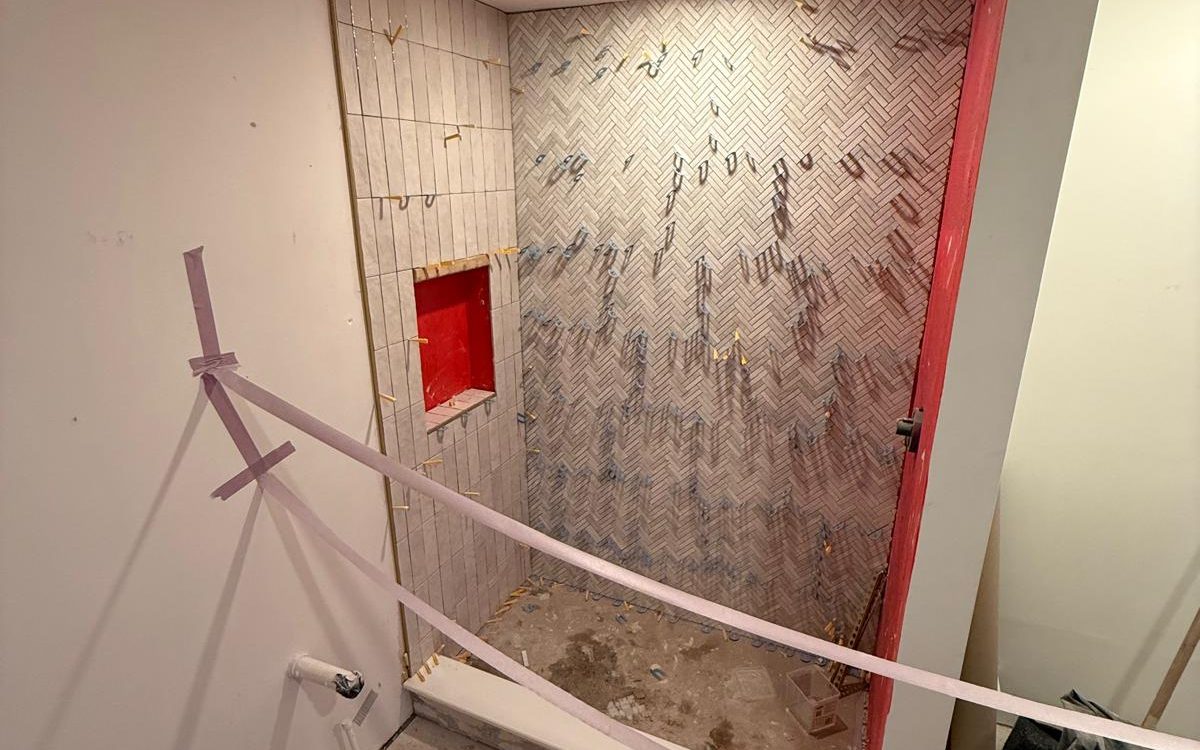
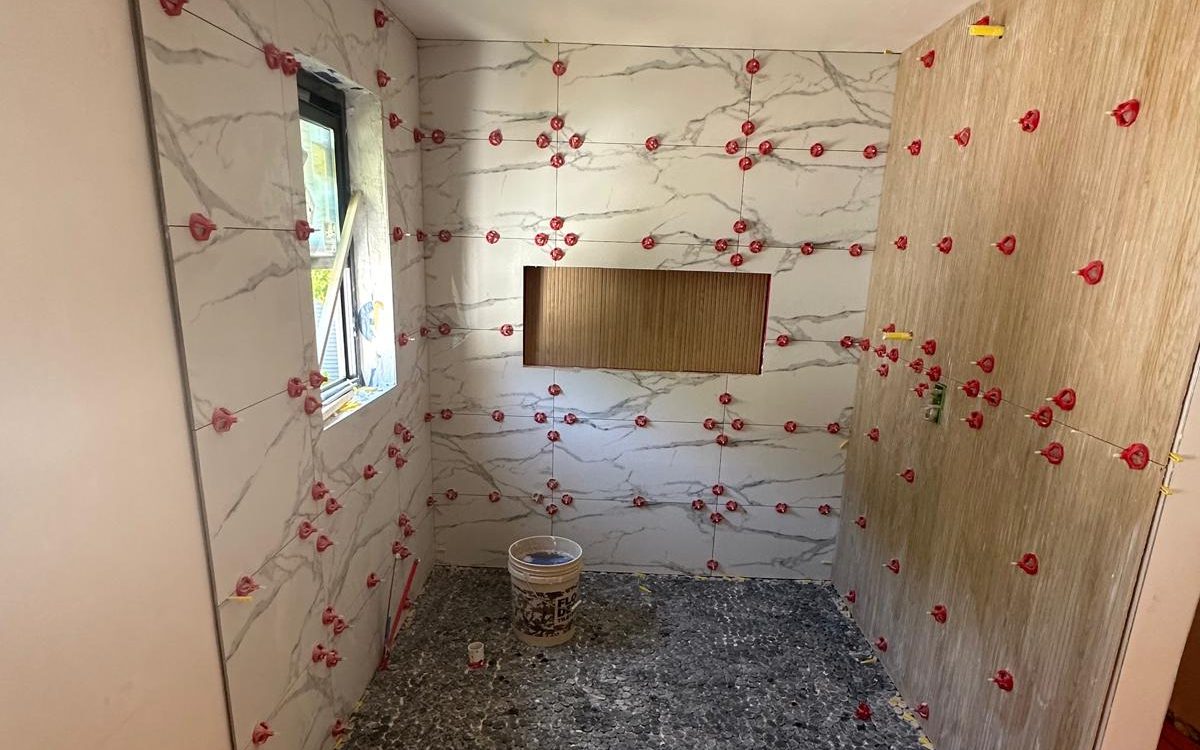
Large-format wall tile, such as 12x24 or bigger, creates a clean look with fewer grout lines, which means less grout to clean. It requires very flat walls and careful installation, since any bow in the wall shows as uneven edges.
Shower floors are different. The floor must slope toward the drain in two directions, and small tiles such as two-inch hexagons or penny rounds follow that slope easily. The extra grout lines also add grip. Linear drains allow larger floor tiles because the floor slopes in only one direction.
Slip resistance and comfort
Wet floors are where accidents happen. Look for floor tile rated for wet areas, often listed with a dynamic coefficient of friction (DCOF) of 0.42 or higher, and consider a matte or textured finish. Polished tile belongs on walls, not on a shower floor.
Comfort also matters. A shower bench, a niche at a reachable height and a hand-held shower on a slide bar make daily use easier now and later in life. Plan these during framing so they are fully waterproofed and properly supported.
Grout choices
Cement-based grout is traditional, affordable and easy to work with, but it is porous and benefits from sealing. Epoxy and newer single-component grouts resist stains and water much better and do not need sealing, though they cost more and take more skill to install cleanly.
Color is a practical decision as well as a design one. Very light grout on a shower floor shows discoloration quickly, while mid-tone grays and beiges hide everyday wear. A contrasting grout highlights a pattern; a matching grout makes tile read as one surface.
Caulk, not grout, at the corners
Inside corners and the joint where walls meet the floor or tub move slightly. These should be filled with color-matched silicone rather than grout, which cracks at changes of plane.
Planning the layout
Before tile is set, your installer should establish where the pattern begins and how cuts fall at the edges. In a well-planned shower, cuts are hidden in back corners, niches align with grout lines, and the first row above the tub or curb is a full tile.
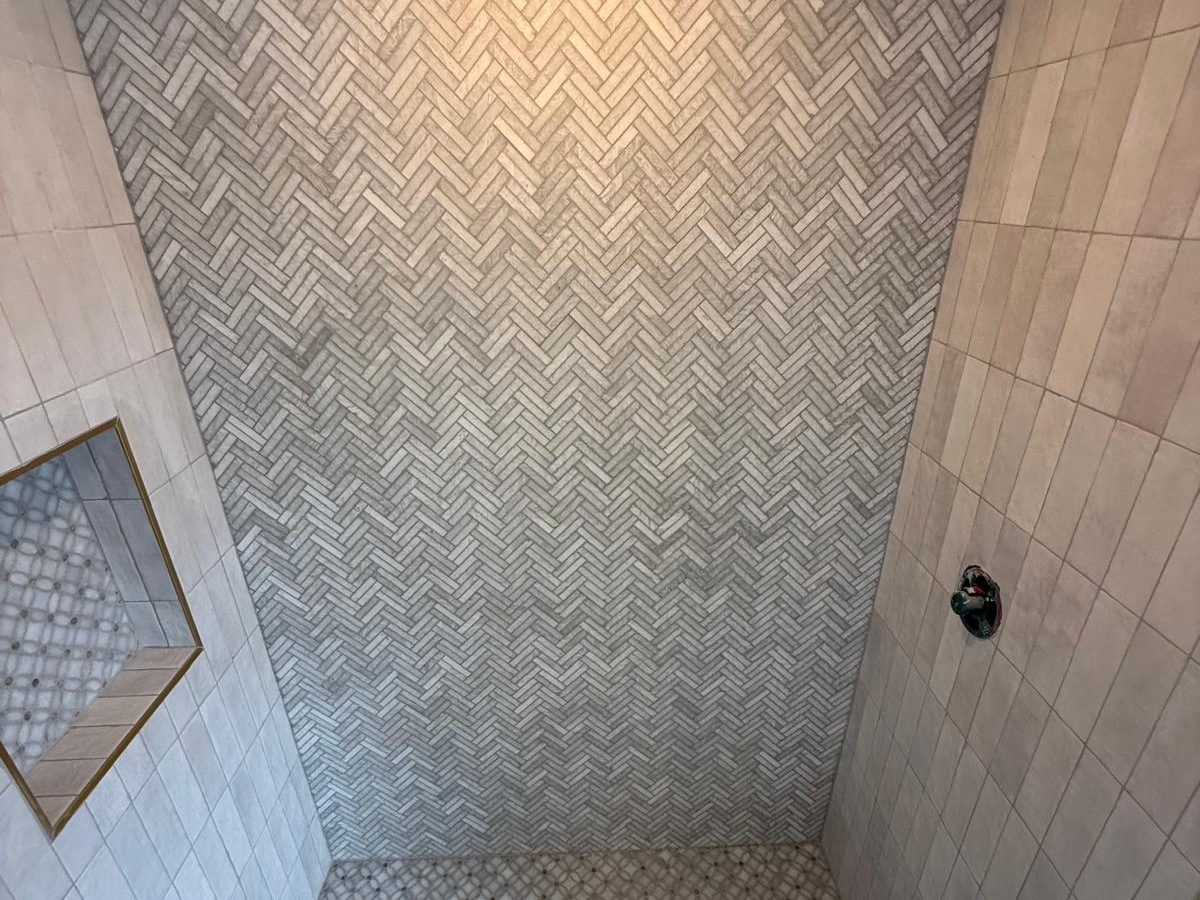
Ask to see a layout or a dry-fit for any patterned tile, especially herringbone, chevron or large stone-look pieces where veining direction matters. Ten minutes of planning prevents years of noticing an awkward sliver at eye level.
Questions to ask your installer
Before signing a contract, ask how the shower will be waterproofed, which membrane system will be used, and whether the pan will be flood-tested. Ask how the installer will handle the transition between the shower floor and the bathroom floor, and where the curb or threshold will sit. Clear answers to these questions say more about the quality of the finished shower than any photo gallery.
Also ask about ventilation. Even a perfectly waterproofed shower suffers when steam has nowhere to go. A properly sized exhaust fan vented outdoors, ideally on a timer or humidity sensor, protects grout, paint and the ceiling above the shower for years.
Quick checklist
- Which waterproofing system will be used?
- Will the pan be flood-tested before tile?
- Where will the layout start and how will cuts fall?
- What grout and sealer do you recommend for this tile?
The bottom line
A shower you love starts with choices that suit how your household actually uses the room. Pick a waterproofing system first, choose tile that fits the wall and floor conditions, and plan the layout before any mortar is mixed. If you are in Everett, Somerville, Medford or nearby and want a second opinion on a tile selection, we are happy to look at samples with you.
Frequently asked questions
Glazed porcelain is generally the most durable and lowest-maintenance option for showers because it absorbs very little water and resists stains.
You can if the tile is rated for wet floors and is small enough to follow the slope, or if you use a linear drain. Many designs pair a large wall tile with a smaller coordinating floor tile.
Cement-based grout is typically sealed after curing and resealed every one to two years depending on use. Epoxy grout does not need sealing.
Often yes, but the floor framing usually needs to be lowered or the bathroom floor raised so the shower can slope to the drain without a curb. It is a structural decision that should be made during planning.
Related services

Written by the AP Tile team
Tile setters and carpenters based in Everett, MA, with more than 10 years of hands-on renovation work across Greater Boston.