
Walk into any tile showroom in Greater Boston and you will see porcelain and ceramic side by side, often with similar prices and patterns. Both are made from clay and fired in a kiln, so it is fair to wonder whether the difference matters. It does, mostly in where the tile goes and how much abuse it will take.
Here is how we explain the choice to homeowners in Everett, Medford and Malden when they are planning floors, showers and backsplashes.
How they are made
Porcelain is made from finer, denser clay and fired at higher temperatures. The result is a harder tile that absorbs less than half a percent of its weight in water. Ceramic uses coarser clay fired at lower temperatures, which makes it softer, lighter and a bit more porous under its glaze.
Many porcelain tiles are through-body or color-body, meaning the color continues through the tile, so a chip is less visible. Most ceramic tile has a glaze on top of a red or white body, and a chip reveals the contrasting material underneath.
Where porcelain works best
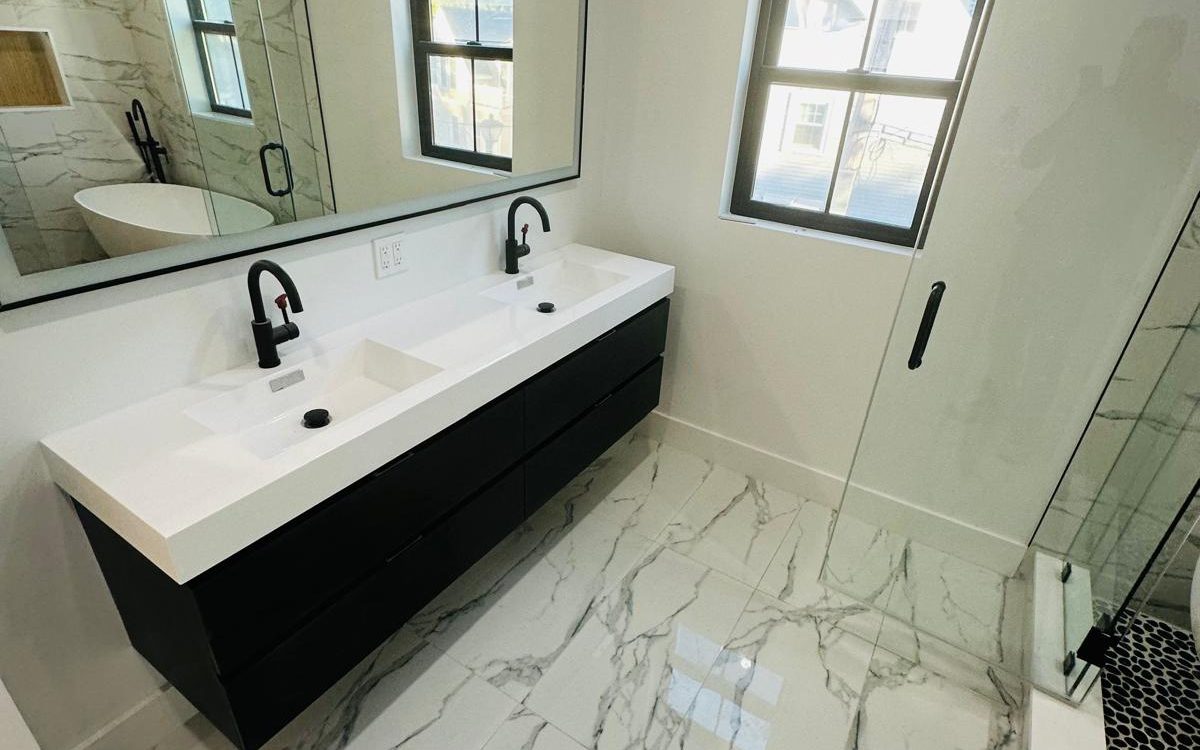
Porcelain shines on floors that see heavy traffic, such as kitchens, entryways and mudrooms, where boots, salt and sand grind on the surface all winter. It is also the stronger choice for shower floors, basements, and any area exposed to freezing temperatures, like a covered porch.
Its density does make porcelain harder to cut and drill, and large-format porcelain demands a very flat substrate and careful setting. That extra labor is part of why porcelain installations can cost more even when the tile price is similar.
Outdoor and freeze-thaw areas
Because porcelain absorbs so little water, it resists cracking when water freezes inside the tile. Ceramic is generally not recommended for exterior use in New England.
Where ceramic is a smart choice
Ceramic is ideal for walls and backsplashes. It is lighter, easier to cut around outlets and windows, and available in handmade looks, glossy glazes and vibrant colors that are harder to find in porcelain. Classic subway tile in a shower or kitchen is very often ceramic.
For low-traffic floors such as a guest bathroom, a good-quality ceramic floor tile can perform well for years at a lower cost. Check the tile's rating for floor use before buying.
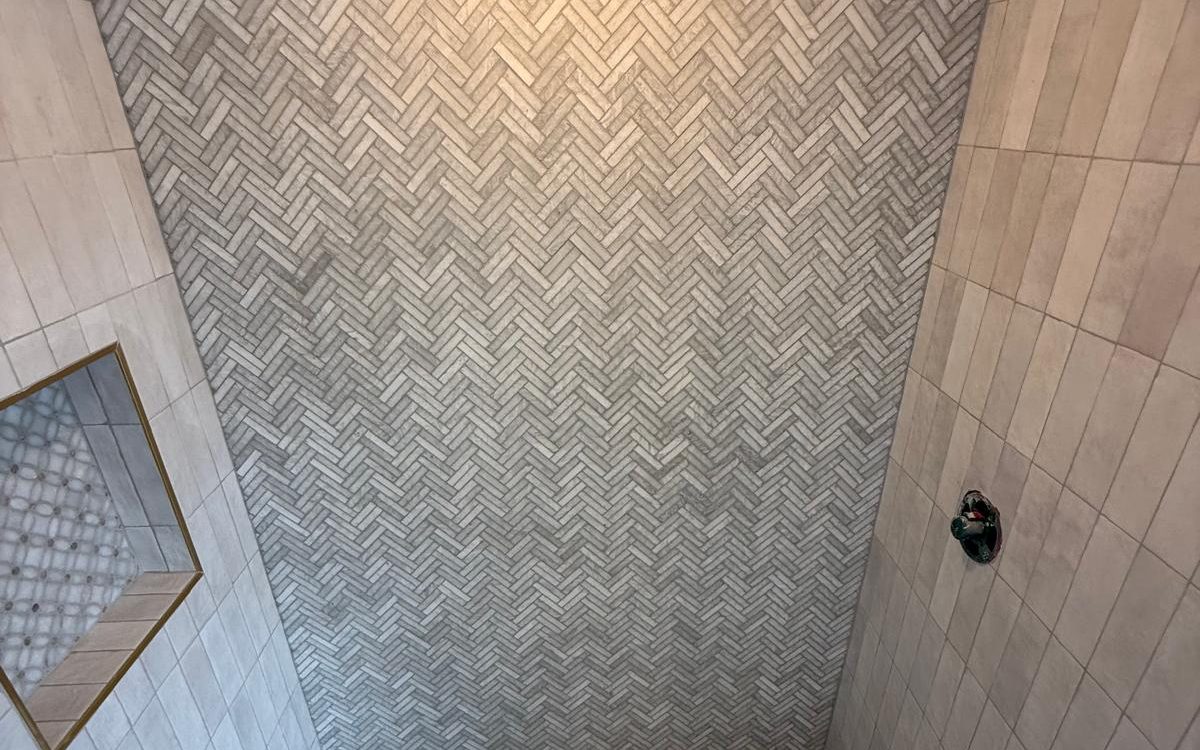
Wall tile in a shower is a gray area. Glazed ceramic performs well on shower walls when the waterproofing behind it is correct, since walls do not carry foot traffic and water runs off quickly. Many of the most beautiful shower walls in Greater Boston homes are ceramic. The floor of that same shower is where porcelain or a mosaic designed for wet floors becomes the better pick.
Comparing cost and installation
Tile prices overlap, so the material cost alone does not always decide. Installation is where the difference shows. Porcelain requires diamond blades, polymer-modified thinset suited to dense tile, and often a leveling system for large pieces. Ceramic sets faster and with less specialized equipment.
Either way, substrate preparation is the same. A soft or uneven floor will crack porcelain and ceramic alike, which is why we check the subfloor and add support before any tile project.
Maintenance over the years
Both glazed porcelain and glazed ceramic are easy to clean with pH-neutral cleaners. Grout is usually the part that needs attention, and sealing cement-based grout keeps it looking fresh longer.
Unglazed porcelain, sometimes used for a matte natural look, can show stains if not sealed. Ask whether a tile is glazed or unglazed and follow the manufacturer's care guidance.
A quick way to decide
If the tile goes on a floor that sees heavy use, in a shower floor, in a basement or anywhere near freezing temperatures, choose porcelain. If it goes on a wall or a backsplash and you love a particular glaze or handmade character, ceramic is a great fit.
When in doubt, bring the samples home and test them in your space. Look at them in morning and evening light, place them on the floor where they will live, and ask your installer how each will be set.
Setting materials matter as much as the tile
Whichever tile you choose, the thinset and installation method should match it. Dense porcelain needs a polymer-modified mortar that can bond to its smooth back, while large and heavy tiles need a mortar designed for large-format pieces that will not slump. Glass and translucent stone need white mortar so the color does not show through.
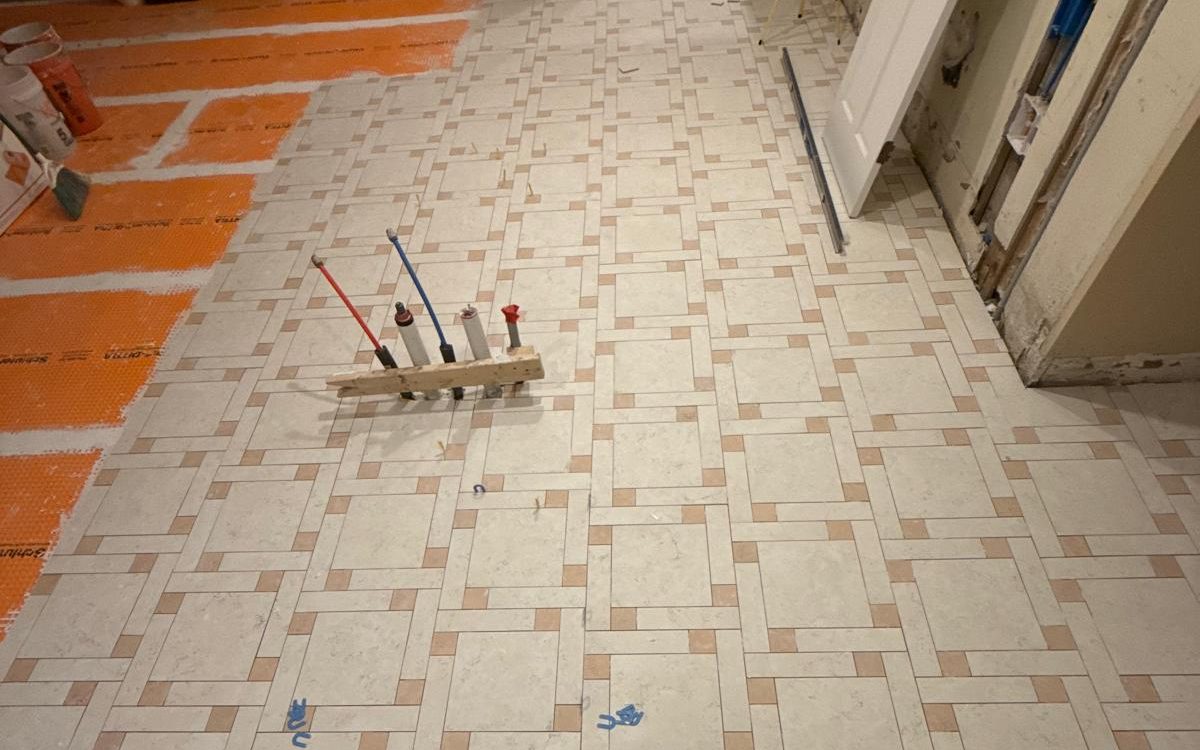
Coverage is the other half. Floor tile should be fully supported with no hollow spots under the corners, which usually means back-buttering the tile as well as troweling the floor. A tile that sounds hollow when tapped is more likely to crack, no matter how strong the material is.
Quick checklist
- Mortar matched to tile type and size
- Full coverage, especially at corners
- Flat substrate checked with a straightedge
- Movement joints at perimeters and large fields
The bottom line
Porcelain and ceramic are both excellent materials when they are used in the right place and installed on a solid, flat base. Think about traffic, water and temperature first, then let the look you love guide the final choice. Our crew installs both every week across Greater Boston and can tell you how a particular tile will behave in your room before you buy it.
Frequently asked questions
Not necessarily. Slip resistance depends on the surface finish, not the material. Matte and textured finishes in either material are less slippery than polished tile.
Yes, if it is rated for floor use. Ceramic floor tile works well in low-traffic areas such as guest bathrooms.
Porcelain resists freeze-thaw cracking far better than ceramic because it absorbs very little water, which is why it is preferred for porches and unheated spaces.
Yes. Porcelain conducts heat well and is a popular choice over electric or hydronic radiant systems, provided the heating system is installed and tested according to the manufacturer before tile.
Related services

Written by the AP Tile team
Tile setters and carpenters based in Everett, MA, with more than 10 years of hands-on renovation work across Greater Boston.